

The Hubble Telescope Simulation™
A governance simulation for leaders and teams.
Experience SeOS™, the minimal configuration for effective service governance.
One mission, one team. Your service governance put to the test.
The Hubble Telescope Simulation™ — a fully staged simulation day in which your team builds a real governance organization and operates it under real pressure.
Roles must be assigned, responsibility must be transferred … and then the clock starts.
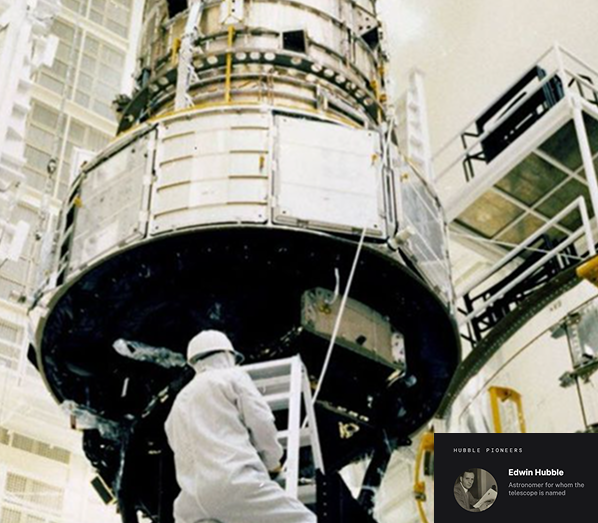
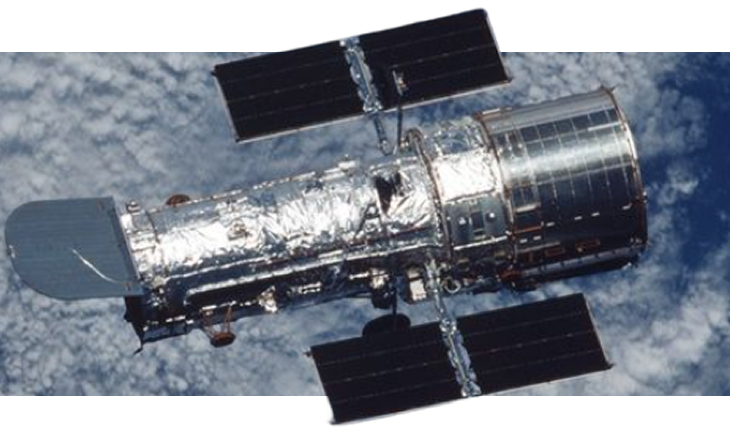
Hubble Space Telescope.
April 1990. Launch. And blurry images.
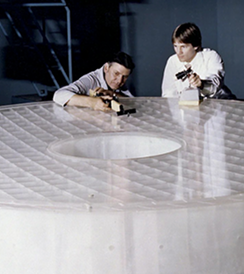
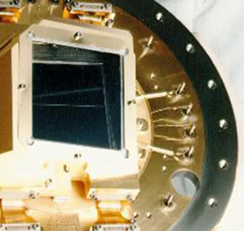
Imagine you are part of the Mission Control Center of NASA and ESA. The largest telescope in history has just been placed into orbit. 1.5 billion dollars, eleven years of development, 400 scientists … and the first images are blurry.
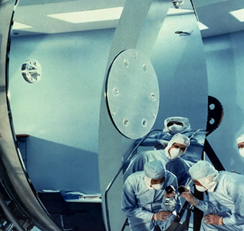
A mirror error of 2.2 millimeters. Detectable if the governance structure had worked. An acceptance test was waved through. Nobody had the authority or the courage to stop it.
What your team does on this day
Build the organization
Assign roles, define the Service Catalog, assign responsibilities, enter into SLAs.
Operate under pressure
Process injects, approve changes, manage escalations, identify SLA breaches and make decisions in real time.
Master the crisis
Identify the problem, perform an Emergency Change, deploy COSTAR and experience whether your governance structure holds during a crisis.
And then … First Light
Hubble sees sharply. Not because the telescope was repaired, but because your governance worked.
16 Roles
Each participant takes on a specific role with defined authority: Service Owner, Service Desk Leader, Technical Owner, NASA & ESA Representative.
20 Injects
Discrete events hit your organization: unannounced, realistic, escalating. Your team decides: What is this? Who is responsible? What happens now?
1 Shared Day
Leaders and operational teams in the same room. The same pressure. The same experience. At the end, your entire organization has a shared picture of what governance means.
Emotional Feedback
“I knew it, but I did not have the authority to act.” This moment is not a role-playing result. It is structural reality. You have to experience it.
Starting Point
Our Observation. Again and again!
Across many organizations. Over many years. Regardless of industry or size. Three patterns — that we see again and again:
“We urgently need a new tool!”
Service Management systems are purchased before it is clear who is responsible for which service. The implementation partner asks: “How would you like it?” — instead of saying what needs to happen. The system operationalizes the dysfunction. Faster.
Task, responsibility and authority are diffusely distributed.
Capacity flows into services, initiatives and requests — without a structural recipient. Who is responsible for this service? The question remains unanswered. Not because nobody works — but because the structure has no answer.
Capability exists, authority is missing.
Service Management frameworks are known — and are only partially embedded in the organization. And we all know: knowledge alone does not change structure.
THE FRAMEWORK
Before the tool comes
the same question. SeOS™
The Service Operating System from CereBree. Not another framework — a structural operating system.

A structural operating system
The governance layer that makes processes and tools effective
Universally applicable
IT, Shared Services, Facilities, Legal, HR
Independent and protected
Developed from 15 years of field observation
Compliance-Ready
That is why the simulation exists
SeOS™ Core Principle
Structure creates impact.
Not tools.
Not processes.
Not meetings. Structure.
Three Layers. One Governance.
Owner
Service Owners define direction, approve commitments and carry accountability towards the Service Customer. They appear at governance touchpoints — not in day-to-day operations.

Leader
Leaders translate Owner intent into execution. They manage throughput and quality. They are responsible for process discipline and for ensuring that escalations are handled structurally — not personally.

Worker
Workers execute, apply expertise and escalate structurally when boundaries are reached. Anyone who absorbs problems that do not belong in their layer harms the system.
Make SeOS™ tangible — not just explain it.
The Hubble Space Telescope, 1990. 1.5 billion dollars. 400 scientists. Blurry images. Not because the telescope was bad — but because nobody held the steering wheel.
This simulation speaks to everyone
who works with service organizations.
Did the group build a governance structure — or merely configure something?
Did the group understand the SLA commitments as a structural obligation — or as a formal act?
Did the group recognize the pattern behind 47 identical incidents — and did it have the authority to act?
Did the governance structure hold during the crisis — or did it collapse?
CIO · COO · Executive
You make decisions about governance structures. The simulation shows you — in one day — what is missing and where to act. Not as a diagnostic report, but as an insight experienced by your team.
Service Owner · Team Lead
You carry responsibility — but do you have the authority, structure and visibility to shape that responsibility? The simulation makes this tangible in practice.
Service Desk · Operations Teams
You live governance every day — usually without calling it that. The simulation gives you language, structure and a shared picture with your leaders.
L&D · HR · Change Management
You are looking for formats that have lasting impact. Not training — experience. The simulation changes how organizations talk about accountability. That remains after the day.
At the end of the day, every participant reads their own sentence from the morning — and realizes, without anything being explained, what has changed.
No Post-it flipchart. No certificate without substance. The simulation is not training. It is the moment when an organization collectively decides that governance is not optional.
The simulation is designed so that governance errors happen.
Two formats, same experience, different context.
Open
For individual participants from different organizations
- • Full day · 12–16 participants per group
- • Mixed governance perspectives
- • Network across organizational boundaries
- • Individual certificate of participation
For Your Organization
Also available in-house, ask for your preferred date.
SeOS Kickoff
Who holds the steering wheel — with name and authority.
Service Owner Program
Named Owners with role profiles and governance touchpoints.
Leader Discipline
Structural escalation instead of informal absorption.
uSMS Readiness
When the governance structure is in place — the right tool.
Anyone who starts the assessment too early buys a tool without a steering wheel.
OPEN TRAINING — FRANKFURT AM MAIN
Dates 2026

LOCATION
Four Tower · Große Gallusstraße 14
60315 Frankfurt am Main

TIME
Every Thursday · 9:00 - 18:00
net per participant
Simulation · Materials · Catering · Feedback
CereBree Deutschland GmbH
CereForge · Hilmar Stock, Sr. VP HRX & CereForge
The simulation is the beginning. Not the end. Write to us — let's talk about your format, your group, your governance situation.
Request Now — hello@cerebree.com